.svg)

Data Management is the key to benefiting from the currentwave of emerging technologies. TheCambrian Explosion of Data tells the story of the geometric growth in thequantity of data. The amount of data has roughly grown by a factor of 16Million over the past decade.

Much of the growth in data is attributed to systemsautomation, the internet, and the internet of things. The growth inunstructured data in the past decade is greater than the growth of structureddata by a factor of 15.
Organizations have struggled for decades to gain access andorganize data for management reporting, business intelligence, and KPI’s. Nowmore than ever, organizations are demanding data driven decisions and performancemetrics to compete and grow.
Historically, the challenge behind any enterprise reportinginitiative has been combining the data silo’s that have been created over thepast couple decades. Many mid-market and larger companies have invested in enterprisedata warehouses and connecting them to reporting platforms such as Power BI, Tableau. The usage of such patterns and platforms hasproven very successful, but companies are now looking to the future, a futurefocused on incremental value and revolving around Artificial Intelligence (AI)and Machine Learning (ML).
47% of business executivessay their companies have embedded at least one AI capability in their businessprocesses and just 21% say their organizations have embedded AI in severalparts of the business. 30% say they are piloting AI. (McKinsey)
In 2019, among companiesusing AI, 70% will obtain AI capabilities through the cloud. Cloud-based AIsoftware and services will make it easier for companies to benefit from AI,accelerating their adoption and spreading their benefits. (Forbes)
Embedding AI into a business requires an intimateunderstanding of the business need and the ability to access and organize the sourcedata in order to effectively utilize the relevant Artificial Intelligence andMachine Learning platforms.
No doubt small to mid-sized companies have some understandingof the business need and benefits of AI, however these organizations may not understandwhat is possible using AI or have thedata management skills to obtain the type of insight into their data theyare seeking. If you would like to discuss your specific situation, click here.
The pattern discussed above is reliant on RelationalDatabase Management Systems (RDBMS) but what about all that unstructured data (BigData) and unlocking data and patterns hidden inside these volumes of data? NoSQLfills a gap and extends the use case of classic RDBMS.
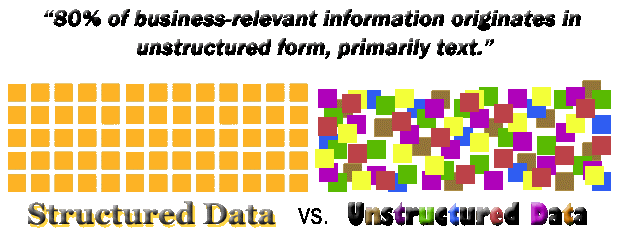
NoSQL technologies are used for the storage and quick accessto unstructured data. They consist of a key value database consisting of acollection of paired identifiers (“keys”) and facts (“values”).
The combination of reporting platforms, RDBMS for structureddata and NoSQL for unstructured data enables any sized organization to gain incrementalinsight for their data. Clickhere to obtain a no commitment data management assessment and discuss ideason how to embed Artificial Intelligence and Machine Learning into yourmanagement strategy.
Data Management is the key to benefiting from the currentwave of emerging technologies. TheCambrian Explosion of Data tells the story of the geometric growth in thequantity of data. The amount of data has roughly grown by a factor of 16Million over the past decade.
Much of the growth in data is attributed to systemsautomation, the internet, and the internet of things. The growth inunstructured data in the past decade is greater than the growth of structureddata by a factor of 15.
Organizations have struggled for decades to gain access andorganize data for management reporting, business intelligence, and KPI’s. Nowmore than ever, organizations are demanding data driven decisions and performancemetrics to compete and grow.
Historically, the challenge behind any enterprise reportinginitiative has been combining the data silo’s that have been created over thepast couple decades. Many mid-market and larger companies have invested in enterprisedata warehouses and connecting them to reporting platforms such as Power BI, Tableau. The usage of such patterns and platforms hasproven very successful, but companies are now looking to the future, a futurefocused on incremental value and revolving around Artificial Intelligence (AI)and Machine Learning (ML).
47% of business executivessay their companies have embedded at least one AI capability in their businessprocesses and just 21% say their organizations have embedded AI in severalparts of the business. 30% say they are piloting AI. (McKinsey)
In 2019, among companiesusing AI, 70% will obtain AI capabilities through the cloud. Cloud-based AIsoftware and services will make it easier for companies to benefit from AI,accelerating their adoption and spreading their benefits. (Forbes)
Embedding AI into a business requires an intimateunderstanding of the business need and the ability to access and organize the sourcedata in order to effectively utilize the relevant Artificial Intelligence andMachine Learning platforms.
No doubt small to mid-sized companies have some understandingof the business need and benefits of AI, however these organizations may not understandwhat is possible using AI or have thedata management skills to obtain the type of insight into their data theyare seeking. If you would like to discuss your specific situation, click here.
The pattern discussed above is reliant on RelationalDatabase Management Systems (RDBMS) but what about all that unstructured data (BigData) and unlocking data and patterns hidden inside these volumes of data? NoSQLfills a gap and extends the use case of classic RDBMS.
NoSQL technologies are used for the storage and quick accessto unstructured data. They consist of a key value database consisting of acollection of paired identifiers (“keys”) and facts (“values”).
The combination of reporting platforms, RDBMS for structureddata and NoSQL for unstructured data enables any sized organization to gain incrementalinsight for their data. Clickhere to obtain a no commitment data management assessment and discuss ideason how to embed Artificial Intelligence and Machine Learning into yourmanagement strategy.

